|
| |
|
|
|
Posted in blogs
by Costa Rica Missions Base
on 9/29/2007
Dear Friends, September 29, 2007
A lot has been going on since our last letter. Summer is a busy time for us, as this is when most mission trips and visitors come through. We helped host, at various locations, a half dozen short term mission trips and played host to more than a dozen visitors in Granada, many here to evaluate joining our work on a permanent basis. The trips ranged from a month long stay in the jungles of Costa Rica to a week of ministry by 40 high school students in and around a dump in Nicaragua. In all, we've helped to bring some 200 volunteers to Central America to help on various projects this summer.
In these photos, you see Carlos helping a group navigate the waters of the San Juan River in Costa Rica, and a group of college students from Florida who ministered to the children in a forgotten mine town (who had never seen a missionary before).
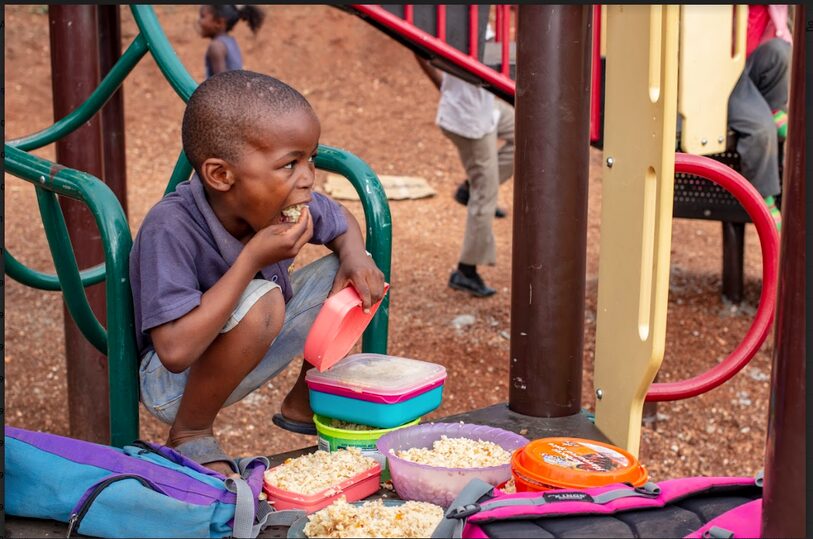
In addition to work, there was time for fun. Days in the barrio culminated in an impromptu soccer match on the street. Sometimes the local livestock get involved, too. Below you can see a feeding program in one of the barrios in Granada. On went the work, the sharing and the caring. It was an important first year for the base. All of us are thankful for the many volunteers who came through to help and to expand their own lives. Rather than explaining the particulars of all these projects, we thought perhaps you would like to see some of the faces of people that you, through your various forms of support, have helped touch this past year….
|
|
Posted in blogs
by Costa Rica Missions Base
on 9/13/2007
the Bridge
A New Church for Granada
The Bridge is up. 
Sunday, September 02, 2007
Granada, Nicaragua
Today a dream became a reality. With 16 souls, one guitar, 12 Morning Glory muffins and just enough good Nicaraguan coffee, we witnessed the first English service in Granada, at least in gringo memory. After a year on the field, I think everyone suddenly felt how much we'd been missing fellowship and worship, maybe like finally being able to take a deep breath or throw off the winter cold. Some drove an hour and a half over axle-breaking roads, some were strangers to each other, but all felt liberation from having to downplay their faith among the post-modern tribe. I wonder if I've ever heard or felt the deep sense of release and reverence we shared as we sang "Beautiful". Faces tipped to the rafters above, eyes closed, vaguely aware of the jazz-like riffs from the throat next door, this was good.
It can be a little noisy on Calle Cuiscoma, particularly if the entire Nica neighborhood strolls by to check out the unfamiliar music. One sturdy soul even took the opportunity to try for a handout. We talked about adding a fan and closing the front doors to the noise next time, but agreed maybe it's better if the neighbors know some of the ex-pats are capable of worship. So there's a flag in the sand. Maybe word will filter down to the grizzled pedophiles holding court on the corner, making their daily selections with obvious impudence. Maybe some seeking soul will cross the line and find us ready to offer welcome. I wonder whose heart is ready for release.
It was improvisation all the way. Meeting in the local O.I. office, serving communion wine from styrofoam, fending off forgotten cell phones. It's a first church plant for all of us, and we're generally making it up as we go, but it's deeply satisfying to finally get going.
It just feels good after all the delays, the fear and opposition. So, we're on our way. TheBridge is up. So Beautiful.
|
|
Posted in blogs
by Costa Rica Missions Base
on 8/1/2007
Hello all,
I just finished up spending time with 4 of the 5 mission trips that came through this summer. What a humbling experience. I got to see up close the faces of 75 adults, young adults and youth who made a decision to take time from their summer vacations and help minister in Costa Rica and Nicaragua. The settings ranged from the dumps and barrios of Diriamba to the jungle of the Sarapiqui. I saw one young woman reward a group of youngsters who had memorized some bible versus with medals she had gotten over the past half dozen years for her excellence in soccer. She gave them all away with a huge smile on her face. All that hard earned hardware given away with such joy. I know I couldn't have done that.
|
|
Posted in blogs
by Costa Rica Missions Base
on 6/7/2007
June 7, 2007
Dear Friends and Loved Ones,
As the head of AIM wrote in describing our departure last fall,"Charles and Sarah Kaye jumped off a cliff yesterday. They and their two young children left on a jet for Nicaragua…, having boxed up their earthly belongings and selling off much in garage sales. So today, they woke up in a remote part of Central America re-invented as missionaries". And so we did. Not quite like this photo, but that's what it felt like. Leaving behind what we knew, moving forward into the unknown. Nearly nine months have passed since we departed. So much has happened and so much is on the horizon that it is hard to know where to begin. An easy place to start though is to thank you for your prayers and financial support that have helped launch and sustain us on this adventure. Because of your generosity we were able to say ‘yes' when called to go. By sharing your resources, lives are being changed. Groups working through this base have made a profound difference already. Families livi ng at the dump in Diriamba experienced food and friends. The orphans on the island of Ometepe had love, perhaps like they had never felt before, pored out into their tender hearts. An old man in Costa Rica, who had been shunned by his community for 50 years, experienced that Jesus loves him and cares for him. Our team of young people described how the dam of 50 years of hurting was broken and tears of sorrow were eventually replaced with tears of joy. You may not be here to see all these things but you need to know they are happening and that you are part of this adventure with us.
Looking out over the next six months, we already see 5 short-term mission trips planned for here and/or Costa Rica with 20-30 participants each. The World Race, 50-60 strong this time, will be back later this fall. There is talk of a medical mission trip and a business associate bringing his entire office down, as well as friends and family coming to pitch in. Also, we recently heard from a friend who visited in March, that she and her husband are considering moving here to join the "base" team.
In addition to all of this AIM volunteer activity, we are feeling called to enter more deeply into the life of this city. Granada, a town of about 100,000 people is located on one of the largest freshwater lakes in the world and in the shadow of a once mighty volcano. It is the oldest mainland city in the Western Hemisphere. Today, the city is one of the best preserved colonial towns in all of the Americas and as such draws many tourists. But Granada is a town of many faces. Beyond the wonderful adobe and tile buildings and cobblestone streets, one finds poor barrios where there is no electricity, running water, or schools. And it is into this strange mix that we are called. We will be bringing in a team of 10-15 college students for several months next year to begin reaching out to the dispossessed in the barrios. The pastor of a local church has asked us to help him start an English language service to reach out to the large ex-pat community here. In addition, he has asked us to think about helping to start a new bilingual, Christian school, of which there are none in the country. Finally, Sarah has discovered that this town is plagued with pedophiles and is a popular destination for child sex tourism (CST). The crime is often fueled by weak law enforcement and ease of access on the one hand and poverty on the other. It has been noted by experts that "the sexual exploitation of children has devastating consequences, which may include long-lasting psychological trauma, disease including HIV/AIDS, drug addiction, unwanted pregnancy, social ostracism, and possibly death". We are beginning to work with local leaders to find a way to stop this trade. There is likely to be vigorous push-back as this will cost many influential and/or well connected people a lucrative source of income and others, time in jail. Sarah recently interviewed the author of an article written over a year ago about the CST problem in Granada. He told her that of all the articles he'd written, that one generated the most anger. Many local establishments went so far as to pull the paper from their racks. Despite the reluctance to face the problem here, what these kids need is protection, healing and hope.
We want to ask you to continue to be a part of this great adventure with us. We covet your prayers, emails and calls and thank you for your financial assistance which allows us to continue to serve.
One last thing you might like to know. Despite all our "busyness" and God's great blessings here, there are times we really miss Virginia, our farm, our church and especially our friends.
Blessings,
The Kayes, Charles, Sarah, Banks and Willa
|
|
Posted in blogs
by Costa Rica Missions Base
on 4/1/2007
Dear Friends,
The big news since our last letter is the arrival of the World Race team. In mid-February 27 young men and women arrived for a month of ministry, meeting felt needs and bringing hope to the barrios, dumps and orphanages of Nicaragua and Costa Rica. Their stories are incredible: spending time in households with dozens of people representing 3 or 4 generations with no electricity or running water; at the dump with families who live by picking through trash to find food and clothes; ministering to a man who had been shunned for 50 years; or finding enough to feed a multitude when only one bowl of food was available. Their impact on the communities in which they lived and served is probably best reflected in the plea by one of the orphans who asked the leader of the team, "please don't leave us". If you want to see and hear more about this and other stories go to adventures.org and look under the section titled "World Race". Start paging through these stories but be prepared to have your eyes opened and hearts broken. At the end of the World Racers' time here they were joined by the team from Guatemala for 4 days of rest, recovery and recitation. We participated in this "debriefing" process, helping to counsel 50 young missionaries as they prepared for the next leg of their year-long journey. In addition, we got to hear first-hand many of their incredible stories. For us, the biggest blessing was just having them here, the unofficial recognition that the Central American base was officially open. We are here. Teams are coming. In fact, there are almost a half dozen trips planned for the rest of the year.
We continue to work with individuals who the Lord puts in our path and our hearts. One boy in particular continues to haunt us, a 12 year old named Gustavo we met our first weekend in town. Gustavo shines shoes to help support his mother and three sisters. His is a slender and attractive boy, very somber and shy. Looking into his eyes, it is evident that he has suffered some deep hurt. We took him to a pharmacy the first day we met him, to buy medicine for a badly infected foot. Each week we bring all the shoes in the house to him, whether they need it or not, just to keep him working. Lately, he has started coming to our house, where we make sure he gets at least one good meal while he works, but he is still very guarded. Recently, a visiting friend from AIM coaxed our first smile out of him. Its slow going, but the stakes are high for Gustavo and boys like him, boys who often turn to glue sniffing and dangerous ways to stay alive. Granada is a very treacherous town for attractive children on the street. We are hopeful that we can find a way to protect him and other children like him.
We've just witnessed our first Semana Santa in Central America, a combination living passion play and spring break. Charles happened upon this life size statue in a neighbor's doorway the other morning. Although perhaps not expressed the way we would, the message is similar and the outcome is the same.

Happy Easter from Charles, Sarah, Banks and Willa.
P.S. …and he didn't even have a machete." With those words Sarah recently finished describing our experiences with the break-ins at our house. My take on all this is a little different than hers, but the final analysis is the same: no one was hurt. In short, God protected us, and our desire to live and work here has not been dampened. In fact, if anything, we see more than ever the desperation that drives such behavior and the deep need for help and hope. But, we would appreciate your prayers for us and our safety.
|
|
Posted in General Articles
by Costa Rica Missions Base
on 3/27/2007
December 14, 2006
Dear Friends,
Hola and an early Merry Christmas. A lot has happened since our last correspondence. The biggest story is the win by Daniel Ortega in the presidential election. Although this is disappointing, it has not changed our minds or hearts for Nicaragua. We have also been selected to host 30 or so members of the AIM World Race Team in February. Aside from working with individuals one-on-one, it will be the first fruit of our organizational efforts since arriving in September.
|
A house in Diriamba and Charles with a family from Diriamba
|
The World Racers are a group of young men and women ages 22 - 35 who will spend the next year traveling the world and learning the basics of cross-cultural aid and ministry. Along with their stated purpose of meeting the felt needs of the people and communities they visit, they will be helping local churches with outreach and programs. Our task over the next few months is to prepare 3 or 4 locations for them to work within. We believe we have identified several places where their presence would have a huge impact. In particular, we expect part of the team to work in the nearby town of Diriamba with the families living at the dump. Charles has made several trips to the area already and has befriended a family (pictured above) who recently suffered a trauma perpetrated on their retarded daughter. The local church rose to the occasion and a formerly childless couple now has a new baby!
|
The volcano on Ometepe and fishing on Lake Nicaragua near Ometepe
|
Another promising location is the island of Ometepe. This beautiful volcanic island is home to more than 50,000 people. But its beauty masks grinding poverty where many inhabitants still live with no running water or electricity. If this were not enough, one of the volcanoes that make up this island has recently come back to life. In the midst of this poverty several wonderful orphanages are bringing order and meaning to the lives of abused and homeless children. We have found several pastors who are having great success in breaking the cycle of hopelessness, especially among the young. Seeing people enjoy the simplest things is a reminder that it doesn't take much to experience a full life.
|
A house in the barrios of Granada and the main Cathedral in Granada
|
Finally, we are hoping to host part of the team right here in Granada. As the oldest colonial town in the new world it can be quite charming, with many fine old buildings. But like Ometepe, poverty and need are everywhere. We have been overwhelmed by the magnitude of the work here. And so we pray, that beginning with this bold group of 30 there will be a steady flow of mission teams and visitors who will participate with us in helping the helpless and sharing the good news of hope here in Nicaragua.
We wish you and your family true peace and a wonderful Christmas.
Blessings,
Charles, Sarah, Banks and Willa Kaye
|
|
Posted in General Articles
by Charles
on 10/31/2006
Dear Friends,
Hello from Nicaragua. Below is a photo of our current street, Calle Santa Lucia, just five blocks from the center of Granada. Even in a city of over 150,000 souls, we enjoy horse carts, an occasional cattle drive and the call of the women selling produce from the baskets on their heads, as they pass by the house.

Right now we are in the immersion phase: learning the language, getting to know the people and their needs, and learning how to get along in this environment. It’s been seven weeks now and we’re still passing through interesting stages of transition. After getting used to water and electricity rationing, local foods and opportunistic organisms, the greatest challenge has been to bend our goal-oriented natures to a mentality where all plans are fluid and time is definitely not of the essence. We are finding it helpful to learn from other missionaries in the area and are reaching out to make friends where we can. Sometimes this comes as a mixed blessing, as every new friendship comes with shocking tales from the field. Indeed, we even have a few of our own now.
Finding the right base site is slow work, as transportation can be difficult. Also, with no multiple listing service, any given realtor may represent only one or two properties. One otherwise promising property had to be discarded as it was previously operated by the Sandinistas, and as such ran a higher risk of expropriation down the road. Another is probably too close to the Costa Rican border which was heavily mined during the Contra war…a two hour drive got us to within a two hour boat ride of another site, only to find the boat was nowhere to be found. We try to make the best of these adventures, and know that with His guidance, we will eventually turn over the right stone.
Until we have a formal base, we have been helping local people in need, such as the pastor from the Caribbean stranded in Granada and many homeless and sick people around town. In addition, one of the real estate agents, a young man with a wife, child and a broken past, has reached out to “Carlito”, in search of prayer and discipling.
Although the needs are great in all areas, we hear constant requests for medical help. This could be a full time ministry in itself, though we have not envisioned our work to be exclusively in this area. Charles, who just returned from a week in the States to help his mother, came back with medicines requested by a Nicaraguan widow (whose property we had briefly considered as a base site) who tries to help out the campesinos in her vicinity. Below is a picture of that operation to help give you a sense of what ministry in the “campo” looks like.

Unexpectedly, we find that a whole ministry could be devoted to reaching out to the ex-patriots who have washed up here in rejection of the materialist lifestyle back home. The opportunities to invest oneself are endless. We are anxious to get the base up and running and move into a more structured role, and need daily reminders to wait on the Lord for his leading. We do know that God is at work here. Even 30 year veterans in this field feel that important things are happening here. You can see it in the simple reference to God’s provision in the following photo.

Right now, God seems to be telling us to look, learn and remain open to His leading. Until the results of the Nov. 5th Nicaraguan presidential election are in we must proceed to develop plans appropriate for either outcome. In the meantime, thank you for your prayers and the support you have provided. We are mindful that each of you is involved in your own ministry back home, both within your families and in a broader context. Strength, wisdom and God’s blessing on you and protection for your families.
Charles, Sarah, Banks and Willa Kaye
|
|
Posted in General Articles
on 5/10/2006
Nicaraguan Orphanages and their Need for Outside Help
Notes from interviews in Nicaragua and Guanacaste province, Costa Rica
April, 2006
Volcan Concepcion, Ometepe Island, Nicaragua
Given the proximity and interrelationships between the peoples of Nicaragua and Costa Rica, I spent much of the last trip visiting orphanages in southwest Nicaragua, the second poorest country in the western hemisphere. Though life for the average campesino in Costa Rica is difficult, conditions are much worse in Nicaragua, so much so that the flow of refugees continues south long after the Sandanista/Contra war. In the area close to the border where we will be operating, illegal refugees try to make a life in Costa Rica much as illegals do in the States, taking the worst jobs at a fraction of what a local might earn, while enduring the scorn of the Costa Ricans who look upon Nicaraguans as violent and uneducated. Our work, by necessity, will include the poor and struggling in both countries. In Nicaragua, as in Costa Rica, children found in orphanages include those without parents as well as those who have either been given up by or taken away from situations where their safety is uncertain. Nicaragua’s child welfare agency, Mi Familia, has oversight responsibility for orphanages throughout the country. However, in talking with directors at several institutions it became clear that those trying to operate without the help of outside benefactors have trouble providing even the most basic care to their children. On the island of Ometepe in the middle of Lake Nicaragua I spent time with two private orphanages trying to find their way in one of the most isolated and depressed parts of Central America.
Helen Vindis, director of Cicrin
Cicrin orphanage currently cares for 29 children aged 5-24 years, the oldest having recently graduated from ward to staff. This orphanage has long been subsidized by a mission in the States, but in the aftermath of September 11th and other global disasters, contributions are down and they are hoping to develop new and less variable sources of support.
The history of the orphanage is interesting. John Olson, president of Trans World Mission, started Cicrin in 1970 on 3.5 manzanas of land on the shores of Lake Nicaragua. In 1979, during the Sandanista revolution, the children were dispersed to local families in order to protect them from being forced into the army. The orphanage director was jailed and the Sandanistas turned the site into a training base for young soldiers, many enlisted against their will. It was closed after the war and remained abandoned for 11 years, until post-Sandanista president Violeta Chamorro invited John Olson to re-open the orphanage. A U.S. couple was put in charge of the program and a young Costa Rican, Helen Vindis, was hired to help out as interpreter for 3 months. It was a very hard time, and the couple eventually returned to the States, but Helen stayed on at John’s request and the Lord’s prompting. The new director of the orphanage and one of the doctors who came through on a medical mission met and eventually married, and ran the site for 11 years with Helen staying on as administrator. They left for the Christian Center in Managua three years ago, leaving Helen as director. Facing a steep decline in support and various other dislocations, the orphanage came close to shutting its doors for good. The remaining staff committed to fasting and prayer for 41 days, and as provisions started to come in, they decided to keep the doors open.
Rancho for meetings and meals at Cicrin
.jpg) Helen, by necessity, has developed an entrepreneurial eye for helping the orphanage manage financially. Their principal supporter has been sending the same $2200 per month for 16 years, which is falling significantly behind expenses. This year the children will start making jewelry to sell to visitors. They have built dorms to attract visiting mission groups and an ample kitchen to serve meals. The room and board charged to mission groups helps out some, and with plans to add cabinas overlooking the lake, this may be more productive in the future. They have just completed a handsome rancho for outside meetings overlooking the lake. Mission groups have built a basketball court, they have a boys and girls soccer team, and are building a house on the grounds for a home-style transitional dwelling for the older kids, similar to other successful orphanages on the mainland. The American Nicaraguan Foundation has recently approved funds for an irrigation project to pump water up from the lake (when I was there the children were doing laundry in the lake, and I had been warned that potable water must be conserved due to extreme scarcity). Their ambition is to develop a sizable garden at the orphanage to further defray costs. Mi Familia brings them new children from time to time from Ometepe as well as the mainland, and sometimes from Costa Rica if the mother is Nicaraguan. They hope to find sponsors for the older children who qualify for special schooling and are hopeful of building a library and computer lab as well. Several of the kids are involved in the Christian Center in a nearby village, with three of them in leadership positions. They would love to see more Christian development programs from future team visits.
Best friends at Quincho
Quincho orphanage, just down the dusty road from Cicrin, houses seven girls on its grounds, with another three staying at the home of the new American directors in Rivas. The oldest was a pretty 19 year old with emotional problems. The youngest was an infant who had been taken away from her mother and placed in protective care by Mi Familia. The child was born with several medical complications common to her mother’s profession. Two more in Rivas were learning the rudiments of family life prior to being placed with adoptive families in the States. All are girls and most have been the subject of abuse of one kind or another. Mi Familia is transferring management of the orphanage from Quincho to a retired U.S. couple who have been helping run the site for the last few years. However, Quincho will retain ownership of the property and the new director was traveling to Managua the next day to see if they can extend the lease and secure funds from the government to keep going. A review of their before-and-after pictures showed that they’ve been trying to improve conditions at the orphanage, but it’s clear that they have a long way to go. Some of the girls go to a private Christian school in the nearby town of Moyogalpa and some go to the NPH orphanage school nearby. However, with NPH for sale and the children there being moved off the island (due to recent volcanic activity) this school may eventually be closed to them.
Studying at Quincho
We visited the new directors at their home in Rivas the next day, and met a volunteer missionary from New Life Advance International who will be joining their team. They take the ferry out to Ometepe every day and commute into Managua on Sundays for services at the International Mission Fellowship. Like many others, they are hoping to acquire a farm to help provide income for the orphanage. They’re considering hydroponic vegetables and raising peleguey (a cross between a sheep and a goat). If they can’t get a continuation on the lease from Quincho, they may have to relocate, but favor the Ometepe location because it provides a buffer between the children and whatever abusive environment they were removed from. They would like to build a youth program in Moyogalpa and revitalize an old bakery on the orphanage grounds and perhaps introduce a sewing project, and they’re discussing a beaded jewelry making project for the children, as well. In addition to the orphanage, the directors mentioned having a children’s camp in Buenos Aires (near Rivas) for children from the Managua dump, where they are building volunteer quarters to accommodate mission groups. The orphanage is in a state of flux now with so many unknowns, and we’re hopeful that the new directors can turn it around.
It seems evident from what we’ve seen that there’s a direct correlation between the vitality of these orphanages, the outlook for the children and the degree to which outside churches and missions have taken a direct interest in helping. Mi Familia just doesn’t have the resources, but thankfully they are open to help from outside organizations. It’s our hope that we’ll be able to join the efforts of others to make a difference in the lives of children at orphanages like these, and look forward to bringing AIM teams in through the new regional base. As always, we’d welcome your observations or feedback.
|
|
Posted in General Articles
on 5/3/2006
Agriculture and the Costa Rica Base
Notes from interviews in Nicaragua and Guanacaste province, Costa Rica
April 16-27, 2006
Part of our ambition for the AIM base is to develop agricultural projects. Our hope is to provide supplemental revenue for mission programs and to strengthen ties to the local community. Accordingly, on every trip we spend a portion of our time interviewing people with projects in the vicinity. This trip included visits with Bob Trolese of VERBO who is developing agricultural projects to help support his Nicaraguan orphanages, orphanages on Ometepe with similar ambitions, and the owner of the Hacienda Los Innocentes in Guanacaste, which is a for-profit enterprise tied to a nature lodge in Costa Rica near the Nicaraguan border. A surprising number of non-profit projects we’ve spoken with are working to develop their own agricultural projects. Many cited declining international support as the reason, particularly following September 11th of 2001.
Casa Bernabe and Bob Trolese’s Agricultural projects
Grapes at Casa Bernabe
Bob Trolese of VERBO has six ongoing agricultural projects in Nicaragua. He stressed the importance of researching the market and getting distribution in hand before beginning a project, having lived through many early and painful cart-before-the-horse exercises. His best success has been with solid, easy to grow vegetables like tomatoes, cucumbers, squash and green peppers, all with a ready market. Other local crops he mentioned with interesting potential were noni (a cactus fruit, easy to grow and prolific, with implications for diabetes treatment) and passion fruit, which has the advantage of not requiring refrigeration for some time after harvest. He believes CAFTA will provide additional markets for exports throughout the region, such as organic products for the US market. Currently, much of their produce is shipped by truck to Honduras.
The Greenhouse at Casa Bernabe
At VERBO’s 120 manzana (a manzana is 7000 square meters or roughly 1.73 acres) farm at Casa Bernabe we saw grapes in cultivation and several fields in-between plantings, but the jewel of their enterprise was a large Israeli-made greenhouse in which they have grown tomatoes, some up to 15 feet in height (an Israeli variety, I was told) and which is operated under organic guidelines. I was told that USAID has been helpful in getting their project off the ground, and that The Nicaraguan Orphan Fund has helped them get the funds together. It seems likely that they will expand the greenhouse project.
The Little Brothers and Sisters of Charity
Pitayah at BSC
On the island of Ometepe in the middle of Lake Nicaragua we visited the Brothers and Sisters of Charity farm attached to the NPH (Nuestros Pequenos Hermanos) orphanage. Of their 15 manzanas, 4 are planted in neem, with another 3 in pitayah. They also maintain a large organic garden on the property. The farm is in a period of transition as the original crops are being reviewed by a new staff. The pitayah has not panned out for export as they had originally hoped, and hasn’t made much money on the local market either. Some of the older plants have contracted a fungus, and they are planning to replace at least a part of them with platanos (plantains). The platano truck comes by regularly and buys from the various local farms, paying from 600 to 1200 cordobas per carga (10 big heads of platanos make a carga). With 1200 well spaced plants possible per manzana, one can harvest 120 cargas per manzana. At 600 cordobas per carga that’s 72,000 cordobas or $4200 per manzana at current exchange rates, and at 1200 cordobas, that’s $8400 per manzana. However, I’m sure I’ve got something wrong here, as all the note taking was interrupted by the usual English/Spanish confusion that attends my every conversation. Anyway, I’m told they take less water and are easier to grow than pitayah, and judging by the number of top-heavy platano trucks jamming the single car ferry to the island, it looks like a thriving business.
Neem at BSC
.jpg) The neem has never been harvested, as they have no press to process the oil. (neem oil is a good organic pesticide, and you’ll see it listed among ingredients if you peruse the appropriate aisle in your local farmers’ co-op). They are researching the possibility of getting a press for the farm, as there is only one processing plant in the entire country of Nicaragua, and that not on Ometepe. The trees are 7 years old and first produce fruit at 3 years, with fruit on the trees from May to June. They do need some watering, though the more established plants are now taking less. Mary Beth, a dear friend and seasoned Central American traveling companion, mentioned to Jayden (the farm manager) that California grape farmers have three years to wean themselves of toxic insecticides, making a good case for increased neem sales at least to that market.
Organic Garden at BSC
.jpg) The BSC farm has a large and impressive organic garden as well. Rice straw (zacate grass) left over from extensive rice cultivation is an inexpensive way to mulch the raised beds. It may also have uses as a cattle feed. Palm fronds are spread over seedlings to protect them from the hot sun during germination. Yuca was prominent in the garden (it is re-propagated with a stem slipped directly into the ground) quiquesque (a potato like root) watermelons, cucumber, carrots, patata (quite large, taking only 2.5 months to harvest and good fried but tasteless when boiled), beets, onions, etc were in cultivation as well. Large mounds of lemon grass help to discourage insects. Jayden mentioned that mandarin oranges do well locally, as do many tropical fruit trees, but noted that one should be careful to use local varieties of trees; for example, some very lovely imported avocados produce almost no fruit, while local varieties do extremely well.
Los Innocentes Farm, Guanacaste Passion Fruit at Los Innocentes
Perhaps the nicest agricultural project I’ve visited was the farm at Los Innocentes Lodge near Santa Cecilia in Costa Rica. Jaime Viquez’s family has owned the farm, about 1400 manzanas, for three generations, and they’ve done a lot with it. His pastures were impeccable, and they are productive enough to sell hay at a handsome profit. He had over a hundred head of horses, beautiful animals used in his trail rides, and well cared for. His prize crop, however, is passion fruit, which is a recent addition to his product base. He has tested several varieties and settled on one that he says is ready for first harvest in six months, produces every six months thereafter, and grows in attractive rows on trellises very much like a vineyard. He’s using wooden supports with wires now, but will soon replace the wood with termite proof cement posts. He plants the rows 2 meters apart (and 10 meters between plants) and plants beans between the rows. After the beans are harvested, he turns them under to enrich the soil for the passion fruit. One advantage of this product, mentioned earlier, is that passion fruit don’t need refrigeration for some time after harvesting. He believes that the vines are good for 6 or 7 years. He quoted productivity at 14 to 17.5 tons per manzana, and $3500 per ton. At $49,000 per manzana, I have to assume I heard wrong. Still, he was very excited and plans on putting more acreage under vines and hopes to convince other farmers in the area to do the same.
Passion Fruit on the Vine
It’s encouraging to see the vigor with which people are reconsidering agriculture in the area. We love to see people working together to improve on the agrarian way of life that has provided the foundation for these villages. This seems preferable to the sad communities who have bought into the notion of prosperity through manufacturing jobs in the city. Because, typically, these jobs last for a short while and move on when the next low cost work force is identified somewhere else. There’s a great willingness to work together in the smaller communities, and our hope is that in helping to strengthen the farming communities we will be helping to bind ourselves more closely to the people we’re committed to serve. As always, if these notes suggest any insights you’d like to share, please feel free to get back in touch with us. We’d love to hear from you.
|
|
Posted in General Articles
on 2/7/2006
As most of you know I was in Costa Rica from the 11th – 23rd of January. There were three specific purposes for the trip: First, to zero in on a location for our base/home; second, to refine the vision for ministry by looking for and at specific opportunities; and third, to attend the wedding of a young missionary candidate who I helped disciple over the last year and a half.
Before going into specifics perhaps it would be helpful to start with the larger picture and then focus on particulars. As it relates to our overall vision, we see three components: We see the base/home (“the base”) as a location to draw the community in by providing work, worship, schooling and health care. Through the base we would be able to go out into the community as we host mission trips. Finally, at the base we would help train frontier missionaries who would then go out into the world. As you know, we have been praying about where to set up this base. After much prayer, multiple trips and consultation, we believe that the northwest section of Costa Rica (Guanacaste Province) would be well suited for our three stated purposes.
On the last page are two maps. The smaller inset is a country map of Costa Rica, while the larger is an expanded view of Guanacaste Province. I have marked both to help document the trip.
Again, the area that we are interested in is
Guanacaste Province. I spent the first 5 days looking at potential sites for the base in this area. Guanacaste has a dry tropical climate with a look and feel that varies from the locally wet pacific cost, to the seasonally wet/dry middle section to tropical as you reach the eastern extreme. This latter section is marked by a series of volcanoes of up to 6,000 feet and is actually the continental divide. The Province has a dozen or so major towns with an overall population of about 250,000 people. However, most of the area is still farmland, principally cattle, rice, sugarcane and oranges. There is a new international airport in Liberia (#2), which would make mobilizing mission trips very easy. The area that we have been focusing on right now for the base is marked #1. This is near an area of cattle farms and orange groves. Of particular appeal are the built-in ministry opportunities with the
migrant workers and to the nearby towns which also supply labor. To give you a sense of distances, the location marked #1 is only ½ hour by car from the border with Nicaragua and about 1 hour from the new airport. Sarah will be returning February 12th to explore this area further. We could use your prayers about a specific property near #1 that I found appealing. Locations #2 and #3 indicate nearby short term ministry opportunities, with the former being a church in Liberia which has hosted teams in the past and the latter a church near Fortuna which hosts a small summer camp for kids.
The next segment of my trip took me from Guancaste to the central area of Costa Rica, #4, which is in the coffee producing region. Here in the town of
Santa Maria de Dota I met the
Guaymi. These indigenous people are the migrant workers who pick the coffee. They live near the border with Panama and arrive in December with 2,000 men, women and children for the 4 months of harvesting. From a distance they are pretty in their colorful native garb. But, up close they are a mess; open sores, festering wounds, scabies etc. And these are the things you can see. Stay a few days and you see that not all of them can work and they are homeless, and after payday the insidiousness of alcoholism shows itself. All this is to say there is a huge ministry opportunity. We have been asked to join our missionary friend Randy Sperger in putting together team(s) for the next season starting this coming December. The hope is to have teams of Doctors and Dentists to provide some basic medical care. Over the longer term the goal is to provide housing and start the process of sharing the gospel. This opportunity is particularly special as we get to work with a man (Randy Sperger) who we truly respect; we have been invited to be involved; we are getting in on the ground floor; and we get to work with indigenous people who are some of the least reached in terms of the gospel. Lest we kid ourselves that this will be easy, I met a young woman yesterday who was sharing with the students at Covenant School tales of her time in Costa Rica over the last two years. We were comparing notes and I told her about the Guaymi. I was telling her about some pictures I had taken and how the Guaymi were pretty until you got up close…She couldn’t believe I got them to let me take pictures. She said they are hard and cold and told me good luck working with them! At least they are not luke-warm!
Next I spent two days with the
Maleku Indians. They live on the eastern side of the Continental Divide in a region not far from the base of the
Tenorio Volcano, as indicated by #6 on the map, and is about 2 ½ - 3 hours from the area we are looking to establish a base. What was once an area of virgin rain forest has been stripped bare, a process finished by loggers but one that began almost a hundred years ago by Americans who forcibly took the rubber trees that once grew here. What is left is a small mainly treeless reservation for the approximately 1,000 Indians that still survive. We have been asked to help find resources for reforestation and micro-enterprise development. This could provide a platform for outreach including VBS. For all those who are wondering how we might serve the Lord when we get really old I need to tell you that in one of the Maleku villages there was a US based short-term missions team helping one of the churches with some repair work. There were about two-dozen of them working very hard mixing cement, carrying cinder blocks etc. My guess is the youngest one there was 70! The other story of interest is that once a year the Maleku hold their annual fishing festival. The whole tribe makes the trek to a nearby river where the women stretch their nets across the river and walk forward beating the water with sticks as they go. The goal is to get the fish into the shallow water where the men are waiting to catch them. The harvest provides food for months. I have been invited back to participate, which I would love to do. The catch is that the river is full of crocodiles so you have to be careful. If it gets too rough I can head back towards San Jose to the Christian summer kid’s camp (#5), which I passed on the way to the reservation. Anyway, more on this if I survive.
As for the wedding, a couple of words: wonderful, special. I pray that God will put more young men in my life to disciple and that He puts many young men and women in our ministry for Sarah and me to disciple.
Blessings to all,
Sarah and Charles Kaye

|
|
Next 10 Articles >>
|
|
|